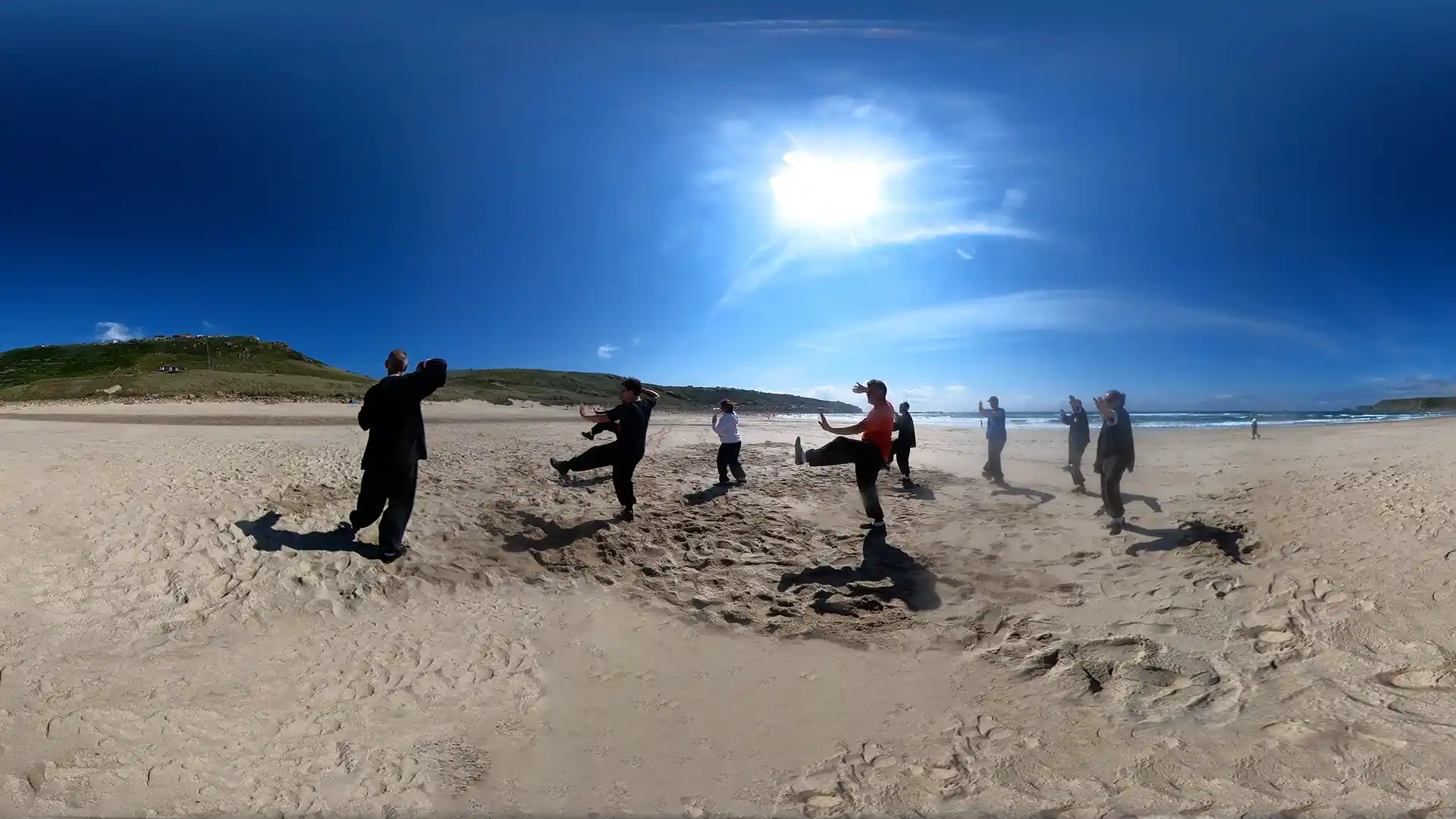
Our T’ai Chi club will be starting back on Thursday 10th September at Caludon Castle Sports Centre 7.30-9pm and beginners, all ages and abilities, will be welcome to join us. For further information, please contact Martin on 07779029976.
Author: Martin Mellett

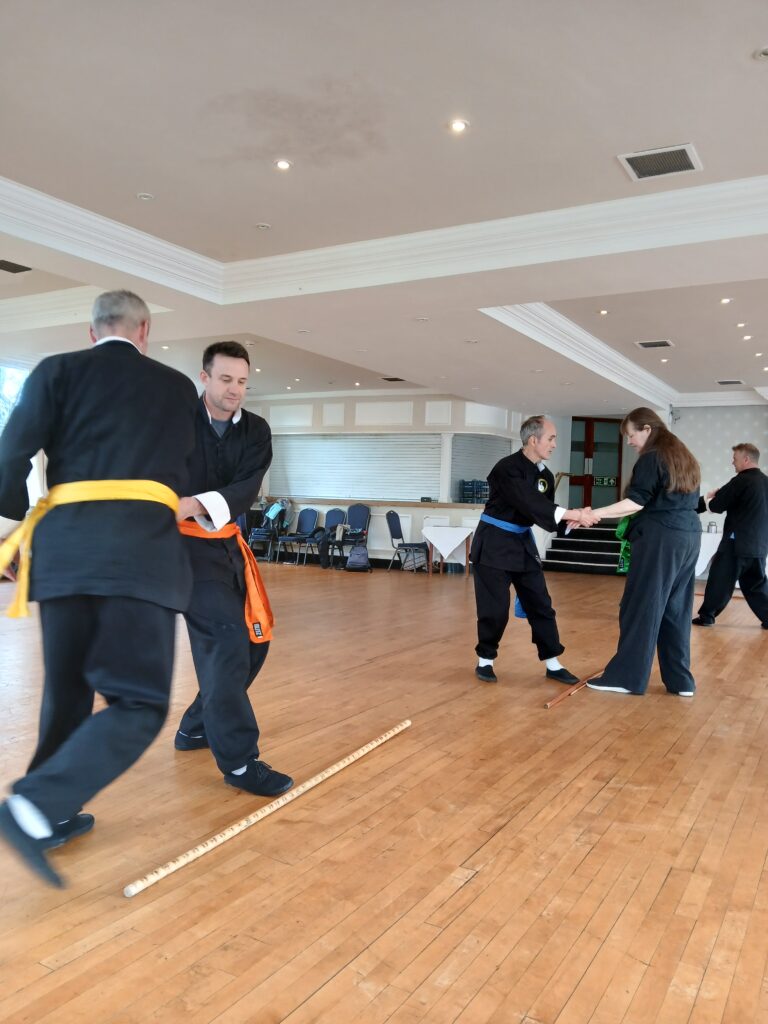
T’ai Chi and Kung Fu Weapons
July 4 th T’ai Chi Weapons 11.30 a.m – 4 p.m
July 5th Kung Fu Weapons 10 a.m – 4 p.m
North Leamington School Gym
Sandy Lane , Blackdown, Leamington Spa CV32 6RD
All welcome and we enjoy teaching beginners, so come along and try this training. It’s a way to reawaken parts of your latent energies and improves self awareness and sensitivity .
Weapons can be bought or borrowed let us know if you need some ordered.
Bring a packed lunch, tea will be provided.
To book a place on either or both of these courses, click on the link below:

Birmingham T’ai Chi Summer Term Course
We will be hosting the Summer term Day Course at the Birmingham Club run by Julie Wall, open to beginners and those already training .
Saturday June 6th 10.30 a.m to 4 .30 p.m
At Kings Heath Community Centre
8 Heathfield Rd, King’s Heath, Birmingham B14 7DB
Please book in and see you there. If you want to become a member before the course let your teacher know or sign up here and we can make you a membership card .
Beginners are also welcome.
To sign up for the course, click on the link below:

First summer course
Saturday 16th May
Caludon Castle Sports Centre , Axholme Rd , Coventry , CV2 5BD
10 a.m – 4 p.m
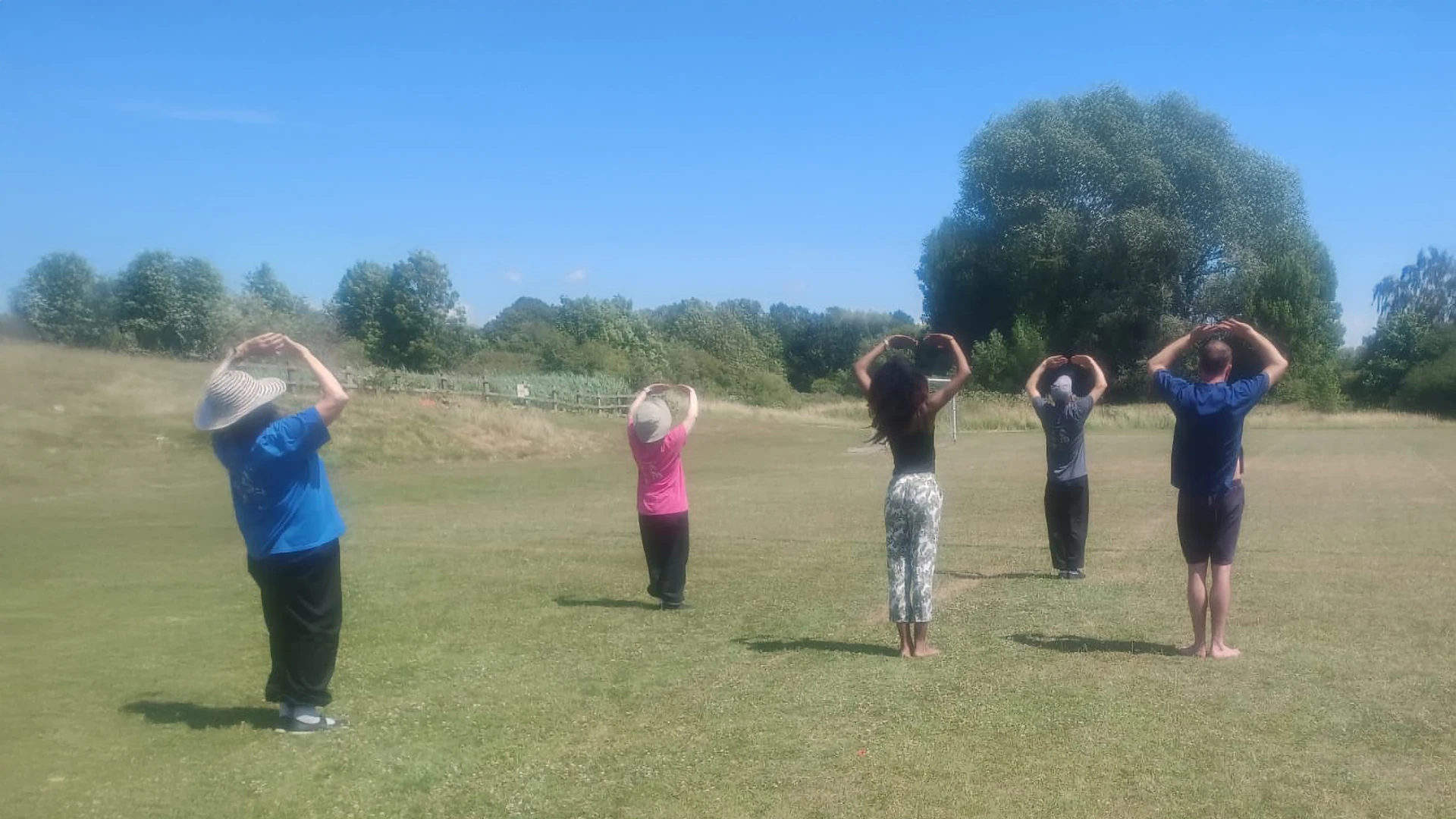
All are welcome to join us for T’ai Chi training in the Dance Studio and outside if the weather is good. Beginners are welcome.
Come along for a day or do half a day.
To book a place on the course, click on https://www.seahorsearts.co.uk/coventry-tai-chi-day/
Contact us for more details Contact Seahorse Arts

Summer Term T’ai Chi
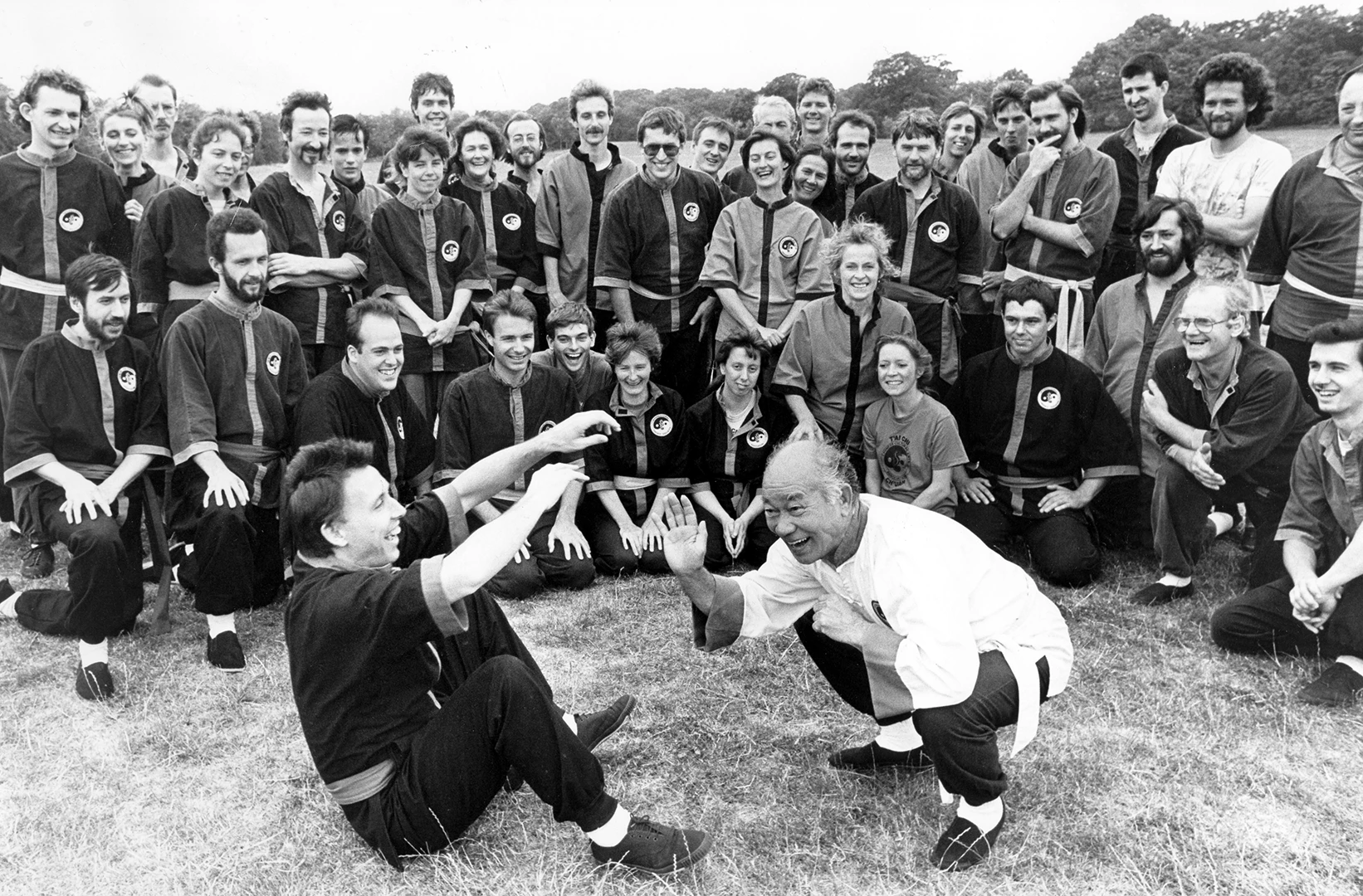
Our T’ai Chi club will be starting back for the summer term at Caludon Castle Sports Centre in the Dance Studio on Thursday 16th April 7.30-9pm. The Lee style of T’ai Chi has been practised in Coventry since Chee Soo brought the art to our city in the 1980s. So why not come along and join us to improve your balance, focus, flexibility and many more areas of your health and well-being? All ages and abilities are welcome. For more information, see www.coventrytaichi.co.uk


Chinese New Year T’ai Chi Course
We will be running a T’ai Chi course for the Chinese New Year Spring Festival on
Saturday February 21st 10 a.m to 4 p.m
At Caludon Castle Sports Centre
Axholme Rd , Coventry , CV2 5BD
This is an excellent opportunity to train with experienced teachers and students from other clubs. Beginners, all ages and abilities are welcome. Bring a packed lunch, tea will be provided.
For more details of this course and how to become a member of our Association, please click on the link below:
https://www.seahorsearts.co.uk/weekend-courses


Leamington Peace Festival demo
We enjoyed being a part of the Peace Festival this year on the summer solstice and talking to lots of people interested in T’ai Chi, including one gentleman who had trained with Chee Soo.

Coventry Godiva Festival demo
It was great being part of the Godiva Festival earlier this month and doing a T’ai Chi demo with those who were interested in the art. Thank you to those organising it who made us feel welcome. We are already looking forward to next year’s festival.
The Seahorse & Lee Style Tai Chi
A Symbol of Resilience and Strength:
- The seahorse is known for its ability to withstand ocean currents, symbolizing resilience and strength. In the context of T’ai Chi, this reflects the practitioner’s ability to remain steadfast and composed amidst external forces, both physical and mental.
- Flexibility and Adaptability:
- Seahorses are highly flexible and can maneuver through their environment with ease. This mirrors the qualities emphasized in T’ai Chi, where flexibility, fluidity, and adaptability are crucial for mastering the forms and techniques.
- Spiritual and Mystical Associations:
- In various cultures, seahorses have been considered mystical creatures, often associated with wisdom and protection. This mysticism aligns with the deeper spiritual aspects of T’ai Chi, which goes beyond mere physical exercise to include meditative and philosophical dimensions.
- Aesthetic and Symbolic Representation:
- The seahorse is also visually and symbolically a fitting emblem for Lee Style T’ai Chi, encapsulating grace and intricate beauty, much like the movements in T’ai Chi forms.
Chee Soo’s Contribution to Lee Style T’ai Chi
- Promotion and Teaching:
- Chee Soo was instrumental in bringing Lee Style T’ai Chi to a broader audience. He dedicated his life to teaching and promoting this style, ensuring that its unique characteristics and benefits were widely understood and appreciated.
- Integration of Multiple Disciplines:
- Chee Soo’s interpretation of Lee Style T’ai Chi incorporated elements of Taoist philosophy, traditional Chinese medicine, and martial arts, making it a holistic practice. This integration offers practitioners a comprehensive approach to health, wellness, and self-defense.
- Development of Training Materials:
- Chee Soo authored several books and training manuals, which have become essential resources for students of Lee Style T’ai Chi. His writings provide detailed explanations of techniques, forms, and the underlying philosophy, making the art more accessible to people around the world.
- Legacy and Community Building:
- Chee Soo established a strong community of practitioners through his teaching, workshops, and personal interactions. His legacy continues through the students he trained, who now carry on the tradition of Lee Style T’ai Chi.
- Emphasis on Health and Healing:
- Under Chee Soo’s guidance, Lee Style T’ai Chi emphasized the health and healing benefits of the practice. This focus on the therapeutic aspects of T’ai Chi has attracted a diverse group of practitioners interested in improving their physical and mental well-being.
In summary, the seahorse symbolizes the qualities of resilience, flexibility, and mystical wisdom inherent in Lee Style T’ai Chi. Chee Soo’s contributions were pivotal in developing, teaching, and promoting this style, integrating it with broader Taoist and holistic health practices, and ensuring its continued relevance and accessibility.